Garage door maintenance starts with noticing a change in normal operation. Steel, timber and other door materials need different care, and the mechanism needs attention too. These observations can help you describe a problem without dismantling or adjusting the system.
01 / NOTICE WHAT HAS CHANGED
Start with movement, noise and visible condition.
You do not need to dismantle the door to notice a change. From a safe position, look for a door sitting unevenly, visible damage, unusual gaps or a cable hanging loose. Think about whether it has recently become noisier, slower or more difficult to operate.
A new grinding sound, repeated stopping or a motor struggling under load deserves attention. Do not repeatedly run a faulty door to reproduce the symptom. If the door is crooked, a spring is broken, a cable is frayed or hardware is coming loose, stop using it and arrange professional assistance.
02 / TIP-UP GARAGE DOORS
One panel does not mean no maintenance.
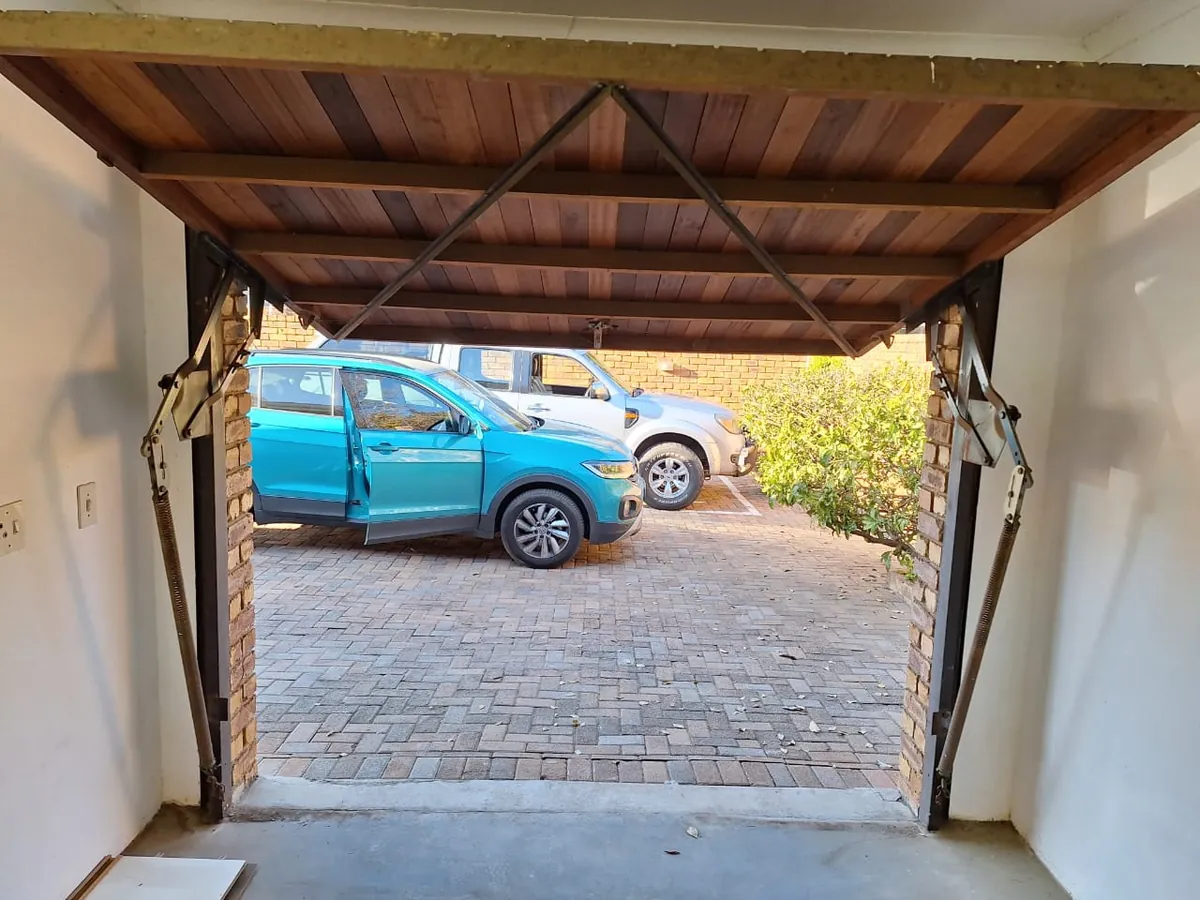
A tip-up door moves as a single panel. Depending on its design, it may use springs, lifting arms, bearings, counterweights, cables or pulleys. The condition of the actual mechanism matters more than a general description of the door type.
For steel doors, watch for corrosion, deterioration around fixing points and damage to the panel or supporting hardware. A protective finish helps look after the surface, but painting over rust or damaged structure does not resolve the underlying problem.
For wooden doors, look for a failing finish, splitting, loose joints or timber deterioration, particularly near edges and exposed areas. Ask which preparation and treatment suit the timber and its existing coating. Do not assume that applying oil over an unknown varnish or coating is the correct approach.
Have the lifting and supporting mechanism checked if the door changes position unexpectedly, catches or no longer moves normally. Parts availability differs between designs and generations; it needs checking before deciding whether repair or replacement is practical.
03 / ROLL-UP GARAGE DOORS
Check the curtain, guides and travel.
A roll-up door coils its curtain above the opening. The curtain, guides, spring arrangement and internal components need to work together. A door that rubs, scrapes, rolls unevenly or has damaged edges may need more than a motor adjustment.
From a safe distance, note visible dents, corrosion, damaged guide strips, loose seals or changes in the way the curtain sits. Do not dismiss worn side materials simply because the door still opens; their function and replacement requirements depend on the design.
Internal spring and support components can wear or fail. Leave the roll and its loaded mechanism to a trained technician rather than removing covers or attempting tension adjustments.
Galvanised or coated steel still needs appropriate care. Surface damage and environmental exposure can affect corrosion resistance, so avoid assuming that any material is completely rust-proof or suitable for every coastal setting.
Explore roll-up garage doors ↗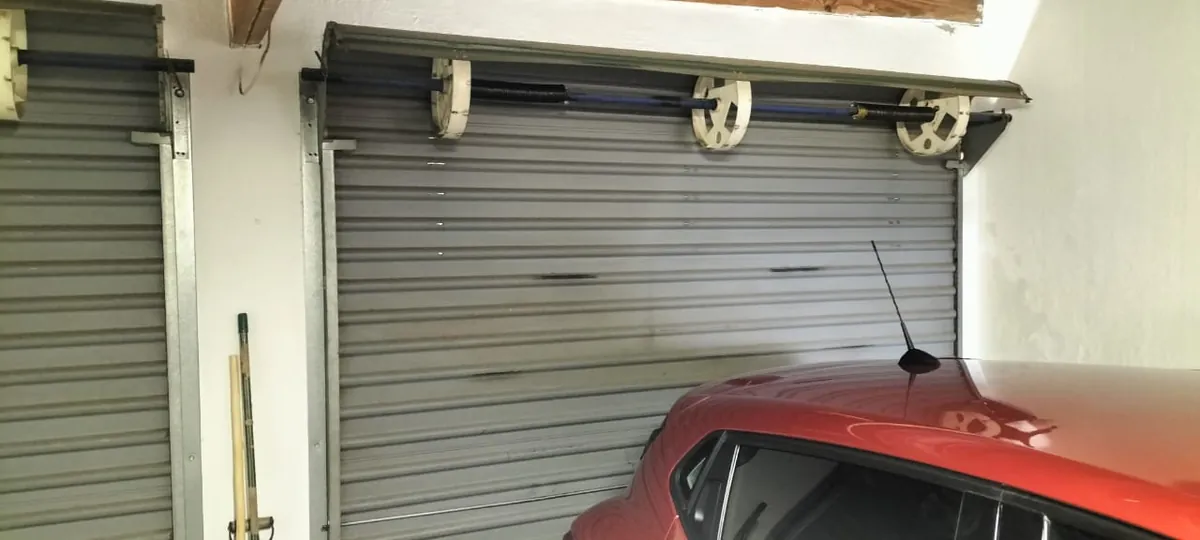
04 / SECTIONAL GARAGE DOORS
Several moving sections need coordinated movement.
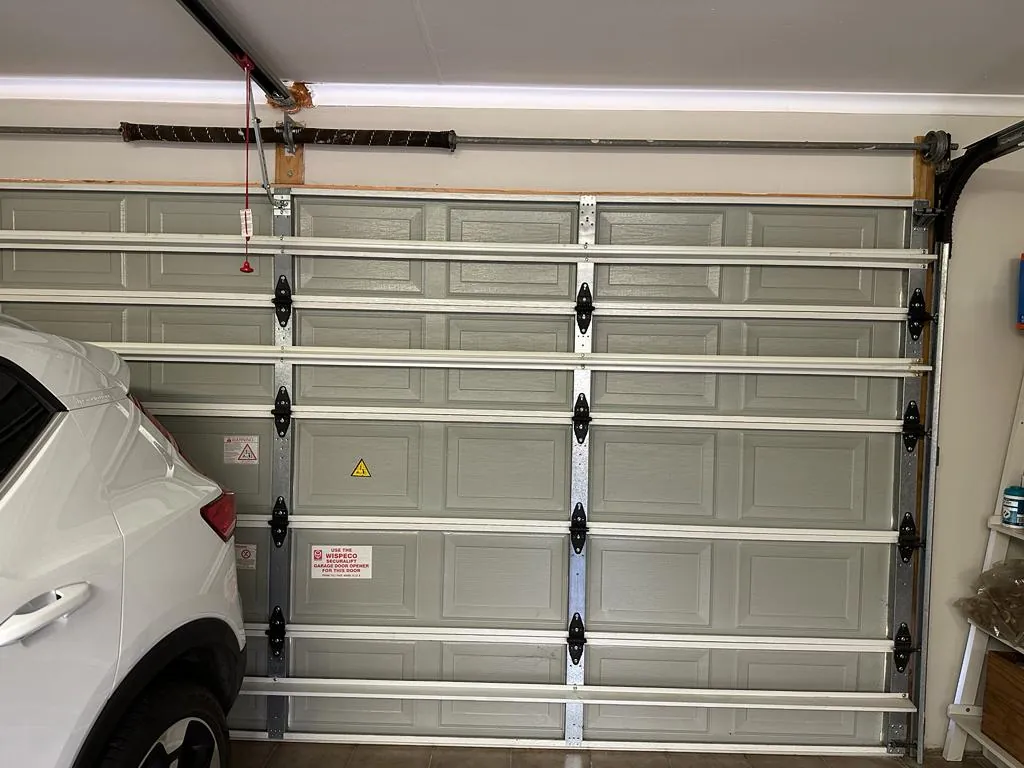
Sectional doors travel along tracks on rollers, with hinges connecting the panels. Their lifting systems commonly include springs, cables, drums or pulleys, plus bearings and brackets. A fault in one part can increase strain elsewhere.
Look for visible panel damage, displaced rollers, unusual gaps, loose-looking track supports or cables that appear frayed, corroded or slack. Observe only from a safe position. Do not tighten bottom brackets, spring anchors or other loaded hardware yourself.
A door that rises unevenly or has become heavy needs a complete assessment. Spring problems are one possibility, but friction, cable routing, drum condition, damaged tracks or an unsuitable component can also affect balance.
The opener should move a sound, correctly balanced door. Increasing motor force or fitting a stronger motor is not a substitute for fixing the mechanical cause.
05 / CLEANING & LUBRICATION
Follow the instructions for the actual door.
“Never lubricate a garage door” is too broad. Some hinges, bearings and other moving components require an appropriate lubricant, while tracks, roller materials and motor rails may have different instructions.
Follow the door and opener manufacturer’s guidance for the product, location and frequency of lubrication. Do not pack the tracks with grease or spray every visible part as a cure for noise. The wrong treatment can collect dirt or be unsuitable for a particular component.
Basic surface cleaning should also suit the material and finish. Avoid aggressive chemicals and keep moisture away from electrical equipment. If access requires reaching into the mechanism or working near loaded lifting parts, leave the task to a technician.
Lubrication cannot repair a cracked hinge, frayed cable, damaged roller or broken spring. Persistent noise or stiffness needs diagnosis rather than more spray.
Manufacturer example: Clopay’s troubleshooting guidance distinguishes moving-component lubrication from the tracks. Use the instructions for your own equipment.
06 / MOTOR & SAFETY EQUIPMENT
Include the opener, controls and beams.
Maintenance is not limited to the door panels. Ask about the drive arrangement, mounting, travel settings, controls and the condition of any backup battery and charging system.
If safety beams are fitted, dirty lenses, poor alignment, damaged cabling or weak batteries may affect operation. The correct checks depend on whether the system is wired or wireless and on the controller. Do not bypass a beam fault to keep the door moving.
Ask a technician to check the protective response and explain the manual release under the manufacturer’s instructions. Do not use your body, vehicle or an improvised obstruction as a test of a suspected fault.
Read about infrared safety beams ↗07 / SERVICE INTERVALS
Use condition and usage—not a fixed replacement age.
A complete opening and closing is one cycle. Spring life and wear depend on cycle ratings, correct specification, usage and environment. A spring is not guaranteed to last a fixed number of years, and its age alone does not establish that the whole door is safe.
Use the manufacturer’s service guidance as the starting point, then discuss the actual installation. A busy complex entrance, coastal exposure, dust or previous damage can change what needs attention and how often it should be checked.
Keep a record of servicing, replaced parts and changes in behaviour. Report a new problem when it appears rather than waiting for a planned service date.
Arrange a service
The door has become noisier, its finish is deteriorating or servicing is due under the equipment guidance. Explain the change when you book.
Stop using the door
It is crooked, jammed, behaving unpredictably or has visible broken springs, damaged cables or loose lifting hardware. Keep clear and request assistance.
COMMON QUESTIONS
Your maintenance questions.
Are tip-up garage doors maintenance-free?
No. Even a simple one-piece door has lifting and supporting hardware that needs appropriate inspection. Timber or steel condition also matters. Parts and replacement availability should be checked for the particular design.
Should garage door springs be replaced every five to eight years?
There is no single replacement age for every spring. Cycle rating, daily use, corrosion, correct sizing and condition affect service life. A technician should assess the system rather than replace or adjust it using age alone.
Should I grease the garage door tracks?
Do not use grease in the tracks as a general remedy for noise or stiffness. Follow the door manufacturer’s cleaning and lubrication instructions. Some moving components may require an approved lubricant, while tracks and other parts have different requirements.
Does an unbalanced door always need new springs?
Not necessarily. The cause may involve spring condition or specification, adjustment, cables, drums, friction or damaged hardware. A trained technician must inspect it before deciding what work is required.
Can I keep using the motor if the door has become heavy?
Stop if the door is struggling, crooked, catching or showing damaged lifting hardware. A motor should not compensate for a mechanical fault. Arrange an inspection before further operation.
How often should I book servicing?
Follow the door and motor manufacturer’s guidance and ask for an interval suited to use, environment and condition. A shared entrance, busy door or corrosive environment may need closer attention than a lightly used domestic installation.
HOUSE OF DOORS & GATES
Noticed a change in your door?
Send your suburb, door type and motor model, with a brief description of what has changed.
Arrange an assessment ↗