If you want to know what has been replaced during a repair, start with a clear agreement and useful records. Photographs, part descriptions and the final invoice can help you understand the work without marking loaded springs or opening electrical equipment yourself.
01 / AGREE WHAT IS BEING SUPPLIED
Distinguish new, repaired and reconditioned parts.
Before approving the work, ask which component is faulty and whether the proposal is to repair it, fit a new replacement or use a reconditioned part. These are different arrangements and should be described clearly.
A reconditioned component is not automatically unsuitable, but its condition, application, warranty and price need to be understood before it is fitted. It should not be represented as a new part.
For older motors or door mechanisms, the exact original part may no longer be readily available. Ask why a proposed substitute is compatible and whether it changes the installation or future maintenance requirements.
02 / BUILD A USEFUL RECORD
Start with photographs and part details.
Safe photographs can help record the equipment before work starts. A full view of the door, the motor label and an accessible identification label are often more useful than an improvised mark.
Do not remove electrical covers, reach into drive mechanisms or move loaded hardware to obtain a picture. Ask the technician to record internal parts when the equipment has been made safe to inspect.
Before the work
Keep the accepted quotation and identify the component to be repaired or replaced. Record the motor model and any safely accessible part label.
After the work
Ask for the fitted part description, relevant model or part number and the work completed. Retain the invoice and any agreed changes.
Where labels or serial numbers are available, ask that they be noted accurately. Some components do not carry individual serial numbers, so the record may instead rely on the specification, packaging and technician’s explanation.
03 / AVOID RISKY IDENTIFICATION METHODS
Do not mark loaded or electrical components yourself.
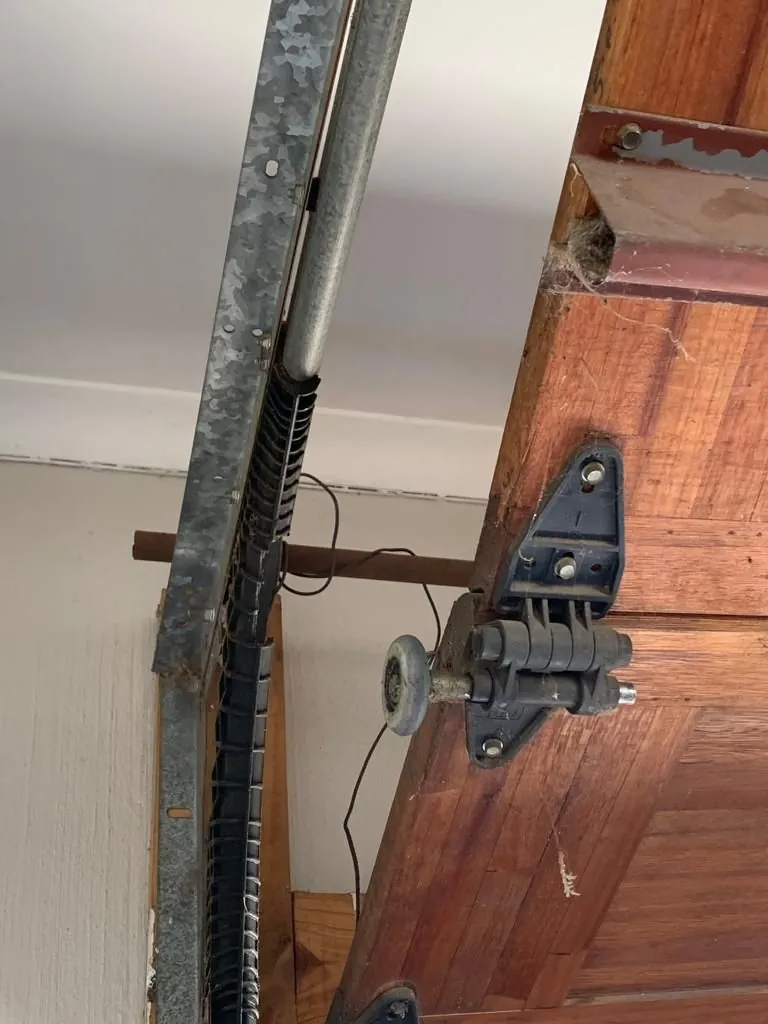
Putting a mark on a spring, cable, cable drum or loaded bracket can require getting too close to a hazardous mechanism. Do not scratch, paint, loosen or handle those components to identify them.
Likewise, opening a motor to mark a circuit board risks electrical exposure or damage to the equipment. Identification should not involve touching electronics or interfering with labels, coatings, terminals or moving parts.
If you want a specific component documented, raise it before the visit. The technician can explain what can be recorded safely and whether a photograph or part description is the more appropriate method.
04 / INTERPRET THE EVIDENCE CAREFULLY
Appearance and date codes are not the whole story.
A fresh coat of paint does not prove that a component is new, and an old-looking surface does not by itself establish that a replacement was reused. Manufacturing finishes, storage and the condition of surrounding hardware can affect appearance.
A date printed on a circuit board may relate to manufacture, design or a production batch. A replacement can legitimately pre-date the installation date. That marking alone cannot tell you whether the agreed repair was completed.
If something concerns you, compare the agreed part description with the invoice and ask the technician to explain the discrepancy. A factual record is more useful than assuming dishonesty from a photograph or date stamp.
05 / UNDERSTAND THE FAULT
Ask why a battery, controller or other part needs replacing.
A motor that does not respond can have several possible causes. Supply, charging, battery condition, wiring, controls or a controller fault may be involved, depending on the operator.
Ask what was tested and how the findings support the proposed repair. It is not sound to assume that most electrical faults only require a battery, or that every non-responsive motor needs a new circuit board.
A clear explanation should distinguish a confirmed finding from an initial suspicion. If more investigation is needed, ask how that work will be authorised and priced.
Garage door motor options and assessments ↗06 / REMOVED PARTS & WARRANTIES
Agree what happens to the old component.
If you want removed parts shown to you or left at the property, ask before the work begins. Some parts may need to go back for warranty evaluation or form part of an agreed exchange arrangement.
Where a component must be returned, ask for the reason and what record can be supplied. Confirm any exchange or return condition in the quotation rather than discovering it after payment.
Leave heavy, damaged or loaded components to the technician. A removed part can still have sharp edges, electrical hazards or handling risks; keeping it is not a reason to handle it yourself.
07 / CHECK THE FINAL RECORD
Compare the invoice with the work agreed.
Check that the invoice describes the completed repair or replacement and any approved additions. Ask for the applicable warranty terms and who to contact if the fault returns.
Keep the quotation, change approvals, invoice, payment record and useful photographs together. If a detail does not match, ask for clarification before treating it as proof of misconduct.
If a concern remains, a separate technical assessment may help establish the installed condition. Agree its scope and cost in advance and provide the previous repair records where relevant.
Reviewing a completed garage door repair ↗HOUSE OF DOORS & GATES
Discuss the parts and scope before booking.
When enquiring about a repair, send your suburb, door type, motor model and the symptom. Ask how the assessment will identify the fault and what information will be provided about any proposed replacement.
Clear descriptions and agreed records help both the customer and the repair company understand what is being supplied.
COMMON QUESTIONS
Documenting repair parts.
Should I mark my garage door springs before a repair?
Do not touch, paint, scratch or adjust loaded springs or lifting hardware to identify them. Ask the technician to document the components once it is safe to inspect them. Photographs and written part details are a safer starting point.
Does a date on a circuit board prove it was reused?
No. A date may refer to manufacture, design or another production detail. It does not by itself establish when the board was fitted or whether an agreed replacement took place. Ask for the part identification and repair record.
Is a reconditioned part always unacceptable?
Not automatically. Its suitability, condition, warranty and price should be explained and agreed before fitting. A reconditioned component should not be described or billed as new.
Can I keep the removed parts?
Ask before the work starts. The arrangement may depend on warranty return, exchange or core-return conditions and safe handling. If the part cannot remain with you, ask for the reason and a photographic or written record where appropriate.
Can a battery problem be mistaken for a controller fault?
Different power, charging, wiring and controller faults can produce similar symptoms. Diagnosis is needed; neither a weak battery nor a faulty board should be assumed from the symptom alone.
What should I do if the invoice does not match the agreement?
Ask for clarification using the accepted quotation, approved changes and any photographs or part details. Keep the discussion factual. An appearance difference or date marking alone does not prove misconduct.
HOUSE OF DOORS & GATES
Ask what your repair involves.
Share your equipment details and discuss the assessment and proposed work with our team.
Make an enquiry ↗