Regular maintenance can help address wear before it develops into a larger problem. It cannot prevent every failure, but a clear inspection and suitable follow-up can help you look after the door, protect the opener from avoidable load and make informed repair decisions.
01 / ADDRESS THE CAUSE EARLY
A small symptom can point to a larger problem.
A garage door is a connected system. Panels, hinges, rollers, tracks, lifting components and the motor all affect one another. If one part becomes damaged or movement is restricted, continuing to operate the door can put additional load on other components.
A service can help identify what is wearing and which work deserves priority. A new noise, rubbing curtain or door that no longer travels evenly should be investigated rather than hidden by increasing motor force or repeatedly pressing the remote.
Early attention does not guarantee a cheaper repair in every case. It can, however, give you the opportunity to address a developing problem before further operation causes more damage.
02 / PROTECT THE OPENER
The motor should not compensate for a heavy door.
The lifting system counterbalances the door’s weight. A door that has become heavy, stiff or uneven needs a mechanical assessment before the opener is expected to keep moving it.
Possible causes include spring condition or specification, cable and drum problems, worn rollers, track friction or damaged panels. It is too simple to assume that every heavy door only needs its springs tightened.
Extra operating load can affect the drive and related hardware. Ask the technician to assess the door and operator together, and to explain why an adjustment, replacement part or wider repair is recommended.
A 12V or 24V motor is not automatically weak because of its voltage. The manufacturer’s application limits, door condition and operating duty establish whether an operator is suitable.
Explore garage door motors ↗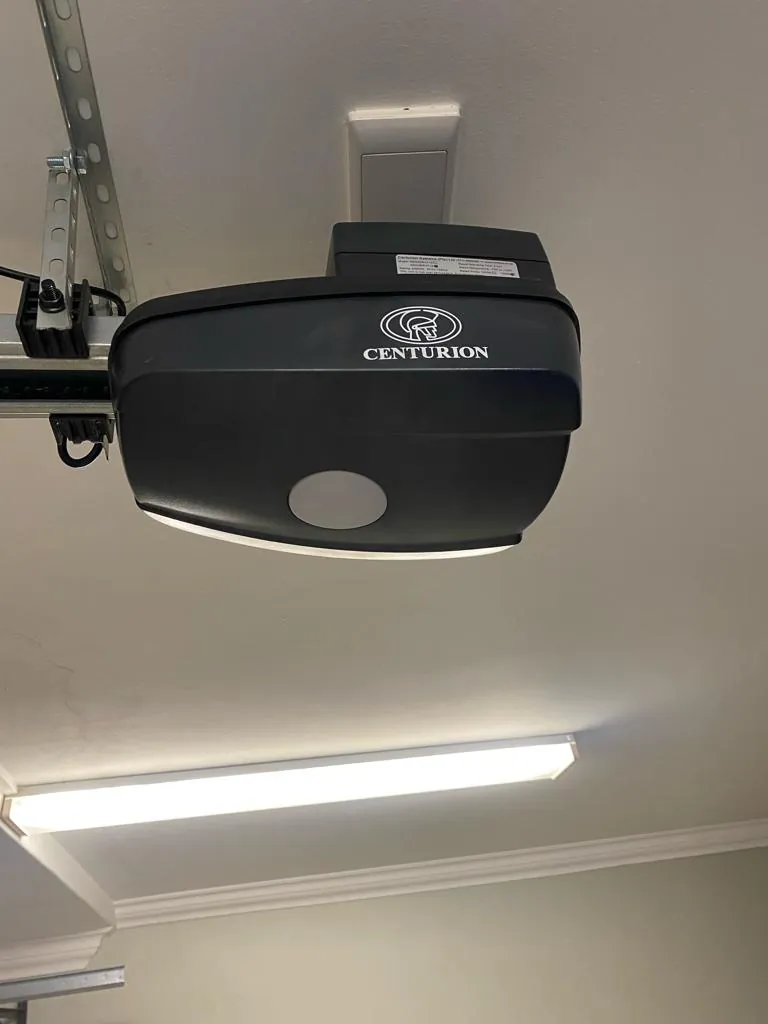
03 / LOOK AFTER THE COMPLETE DOOR
Limit avoidable strain on panels and hardware.
Hinges, roller brackets, reinforcement and track supports need to suit the door and remain in good condition. Distorted movement or damaged hardware can concentrate loads where they do not belong.
On a steel sectional door, visible damage around fixing points or panel joints may need attention before continued movement worsens it. Timber doors also require assessment of joints, fixings and material condition.
Not every crack, tear or panel defect is caused by spring balance. Impact, corrosion, deterioration, unsuitable components and other faults can contribute. A service should establish the observed condition rather than assume a single cause.
Mechanical checks
Ask about the lifting system, cables, rollers, hinges, tracks, supporting hardware and controlled travel.
Material condition
Discuss corrosion, timber deterioration, panel damage and protective finishes where relevant to the door.
04 / POWER, CONTROLS & THE ENVIRONMENT
Include the equipment around the door.
For an automated door, servicing may include the drive arrangement, mountings, controls, receiver, charging system and backup battery condition, depending on the operator and agreed scope.
Dust, insects, rodents or moisture may affect equipment. Report visible signs and leave internal inspection to a technician. Do not open electrical housings, disturb wiring or spray chemicals into the motor.
Safety equipment also needs attention. Dirty lenses, damaged cables, misalignment or weak batteries can affect fitted beams. The appropriate checks depend on the beam type and controller; bypassing the protection is not a maintenance solution.
Testing the protective response should follow the equipment instructions. Ask the technician to explain what was checked instead of using your body or vehicle as an obstruction test.
Infrared safety beams and compatibility ↗05 / PLAN EXPENDITURE
A useful service identifies priorities.
The financial benefit of servicing is not a promise that every future repair will disappear. It is a clearer picture of what needs attention now, what can be monitored and what may need budgeting for.
Ask for the findings to distinguish immediate defects from recommended maintenance and optional improvements. Where parts are becoming difficult to obtain, a planned replacement discussion can be more useful than waiting for an urgent failure.
Keep a record of the service date, work completed and components replaced. It helps explain recurring symptoms and makes later quotations easier to compare against the work already done.
06 / SET A SUITABLE INTERVAL
Service according to use and condition.
Follow the door and operator manufacturer’s guidance, then consider the actual environment and workload. A lightly used home door and a busy complex entrance can have very different maintenance needs.
Dust, corrosion exposure, frequent cycles and a history of faults may justify closer attention. A single annual rule should not override the equipment guidance or a developing problem.
Maintenance also needs the correct products and methods. Some components require an approved lubricant, while tracks and other parts have different requirements. Follow the instructions for the actual equipment rather than applying grease or spray everywhere.
Recognise maintenance warning signs ↗07 / WHEN A SERVICE BECOMES A REPAIR
Do not keep running a damaged mechanism.
If the door is crooked, jammed, unusually heavy or behaving unpredictably, stop using it and keep the opening clear. A broken spring, frayed cable or moving support needs professional assessment.
Do not force the motor, release a raised or suspect door, or adjust loaded lifting hardware. Springs, cable drums and bottom brackets can remain under substantial load.
Describe the symptom when booking so the enquiry is treated as a fault assessment rather than assuming routine servicing alone will resolve it.
HOUSE OF DOORS & GATES
Arrange a service with a clear scope.
Tell us your suburb, door type, motor model and any changes in operation. For a complex or business, include the number of doors, approximate usage and access arrangements.
Ask what the service includes and how additional repairs will be quoted and approved. The team can explain the next step for your installation and confirm availability.
Explore servicing and maintenance ↗COMMON QUESTIONS
Maintenance and long-term costs.
Does regular servicing guarantee that a door will never break?
No. Servicing can identify wear and faults, but components can still fail. Its value is in addressing defects, checking operation and planning work rather than guaranteeing a breakdown-free door.
Can a badly balanced door damage the motor?
A heavy, stiff or poorly balanced door can place extra load on the opener and related hardware. The cause needs diagnosis; springs, cables, tracks, damaged components or other faults may be involved.
Should every garage door be serviced once a year?
The appropriate interval depends on manufacturer guidance, usage, environment and condition. Ask for a schedule suited to the actual installation, especially for busy shared entrances or commercial doors.
Does the motor voltage tell me how strong it is?
No. A 12V or 24V label does not by itself establish lifting capability or suitability. The operator’s specified application, limits, duty and correct door balance matter.
Should I open the motor cover to check for pests?
Leave internal inspection to a technician. Report visible signs of insects, rodents, moisture or damaged wiring without opening electrical equipment or reaching into the drive mechanism.
Can I wait for the next service if the door starts jamming?
Do not continue operating a crooked, jammed or unpredictably moving door. Stop use and arrange an assessment rather than wait for the scheduled service date.
HOUSE OF DOORS & GATES
Plan the next service.
Share your suburb, equipment details and any change in the way the door operates.
Make a service enquiry ↗